
Once again, our yearly or thereabouts sojourn to Florida provided the inspiration for this article. Last year’s message was about First Impressions, and this year’s is a related theme: attitude.
We’ve grown attached over the years to a favorite “Jimmy Buffet”-type bar and marina in Englewood, Florida: Stump Pass Marina. Jimmy Buffet’s tune “Changes in Attitudes, Changes in Latitudes” might have inspired it, but I couldn’t help noticing a large sign that greeted us this year: “New Attitude, Same Latitude!” As it turns out, the marina is under new ownership since our last visit, and it shows.
Had we not enjoyed so many positive experiences at Stump Pass Marina’s adjoining tiki bar (under different management) in prior years, an encounter with the marina manager  last year might have dissuaded us from returning as often. To shorten the story, suffice it to say that he had a very bad attitude – a rude, unwelcoming attitude that made me question how he could even be working there let alone manage the marina. This year, I biked to the marina early one morning to poke around and check out the “new attitude.” Wow, what a difference! Despite busyness pulling boats and stocking fishermen for the day, I was greeted by Steven, the new manager, with a warm “Welcome; ‘coffee’s on the house!” I had no intention of buying anything upon my arrival, but purchased a chart of the local waters and a beverage holder printed with “New Attitude, Same Latitude!”
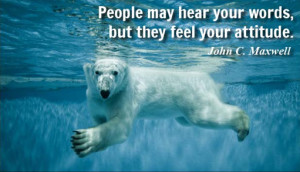
Attitude matters, a great deal. How many times has the attitude of a company’s representative – clerk, server or senior professional – determined whether you chose to do business there, or even reengaged? Rich Daly, owner of Consatech, entrepreneur and member of Minnesota’s Technology Hall of Fame, knows what a difference attitude makes. Leaving a voice-mail for Rich recently, I was greeted by Consatech’s “attitude hot line” message of the week: “Ability determines what we can do, motivation determines what we choose to do, and attitude determines how well we do it.” It also determines how well we are received, the quality of our personal and professional relationships, whether others choose to do business with us and even our health. Research has demonstrated, for example, that a positive or optimistic attitude correlates with resilience and longevity.
Changing attitudes, our own or others’, usually isn’t easy; here are some guidelines:
- Start with our own. Attitudes are contagious, and if our attitude is showing, for better or worse, it is likely to impact others’.
- Psychologists talk about the “ABCs” of attitudes: their Affective, Behavioral and Cognitive components, which influence one another. There are days when I feel
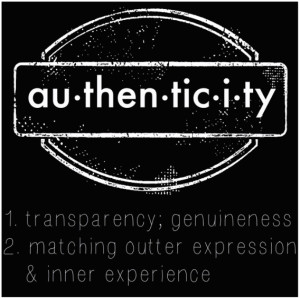
 (Affective) lousy, and if I don’t manage that will likely display a lousy attitude. I’m not always successful, but if I can manage to act (Behavior) like things aren’t lousy, pretty soon my attitude lightens up. (Some might claim this isn’t “authentic,” but I’ve come to believe that authenticity is being our best selves vs. exactly how we feel at the moment.) Improving the Cognitive component is often about reframing; I try to remember that “an inconvenience can be an adventure wrongly understood, and an adventure is an inconvenience rightly understood.” (G. K. Chesterton) If I think things will go well, there is a higher chance that they actually will than if I think things will go poorly.
 - Keep basic “EQ” principles in mind, especially self-awareness, self-regulation and empathy. Awareness that our attitude might be showing is a first step; than we can focus on practices to adjust our attitude or at least our behaviors. Empathy helps; realizing that others might just be having a bad day and cutting them some slack lessens the likelihood of worsening their mood or of getting hooked by it.
- Cultivate an “attitude of gratitude.” No matter how bad off I think I am, simply reflecting on what’s gone right and what I’m grateful for is a game-changer.
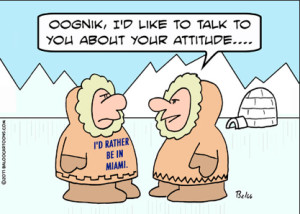
- Do attitude checks. On our same Florida excursion this year, we dropped by two neighboring shops to find bedspreads. The first shop didn’t stock what we needed, but the clerk was friendly and helpful, suggesting several neighboring shops to try; just as at Stump Pass Marina we lingered long enough that we made another purchase we hadn’t planned to. Next door, the reception was entirely different; an intimidating looking clerk with a scowl on her face that honestly resembled an over-sized bridge troll bellowed “Yes?” I often wonder when greeted by company clerks, receptionists or personnel if owners ever conduct checks to gauge how attitudes affect business and their brand.
- Keep the end in mind. Taking a few moments to reflect on our purpose or intentions can remedy bad attitudes, or at least their manifestations. “Why am I here?” What are the outcomes I want from this transaction?” “How do I want this to affect our relationship?” are some good questions to ask ourselves.
- Reinforce positivity. In addition to modeling constructive attitudes, recognize and reinforce others who do; while not as tangible as some other contributions,
 know that they play a significant role shaping winning cultures. Conversely, help those who may be unaware of unconstructive attitudes reshape theirs. Don’t discount the importance of attitude when it comes to selection and promotion decisions. According to research by Mark Murphy of Leadership IQ, some variation of attitude accounts for all but 11% of the 46% of new hires that fail within 18 months.
A good friend’s mother, Betty, passed away not long ago. Greg shared a favorite expression of his mom’s, and her customary conclusion to a phone call or visit: not the usual “Have a great day,” but “Make it a great day!” We have more control than we think over the quality of our and others’ days, and attitude is often the determining factor, so “Make it a great day!”
The last of human freedoms – the ability to choose one’s attitude in a given set of circumstances.
Viktor E. Frankl
There is no menial work, only menial attitudes.
William J. Brennan, Jr.
If you don’t like something, change it. If you can’t change it, change your attitude.
Maya Angelou
 beginnings, endings, transitions and passages. Perhaps we would benefit from a comparable guide to preside over inner and outer realities – half to help us accurately see and interpret outside realties, and half to help us be on the outside what we claim or hope to be on the inside. Meanwhile, here are some guidelines for managing both faces of authenticity:
 reality. When Ford lost market share to General Motors early in the 20th century, Henry Ford Sr. discounted massive market intelligence indicating that consumers were eager for autos other than black in color or without extras. Sigmund Freud was well aware that cigar-smoking correlated highly with oral cancer; nevertheless he smoked several cigars a day until he died prematurely of oral cancer.
 much as saying one thing but doing something different; people don’t listen to what we speak as much as they watch our feet. Sometimes the disconnect is unintentional; for example inTEgro’s Organizational Integrity Survey occasionally surfaces unintentional contradictions between stated organization values and hiring, promotion or performance management practices.
 U.S. Navy Seal’s lessons as a Seal applied to life and leadership. (A book I heartily recommend; see the sidebar.) He talks about the importance of “front sight focus,” in SEAL usage “keeping your eye on the front sight of your weapon, and the front sight of your weapon on your target;” For tennis, of course, that translates to “keep your eye on the ball!”
 repeated attempts, learning from our experience. Cleaning up some files recently, I found the copy of a letter I wrote to the Personnel office (yes, that’s what they called it then) of a major employer after graduating from college; I had previously applied, written and called on several occasions about the same position and been rejected. I learned after they eventually offered me the job that they decided to interview me only out of curiosity about who would be so persistent.
 of its forms. “Coming out of our shell,” voicing unpopular opinions, tapping dormant potential or in other ways following a path less traveled, especially when risky, are all forms of coming out; they also constitute much of what we mean by “authenticity.” If we are unable to do these things we will fall short of living up to our promise and potential; we will be robbing ourselves, our organizations, families and communities of what only we can offer.
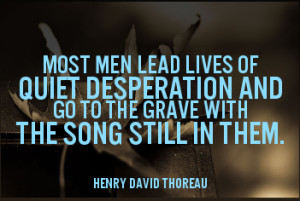 not forget Matthew Shepard. Fortunately, none of us is likely to face those kinds of consequences for coming out by taking unpopular stands, speaking our truth or following our own path. Yes, there will likely be discomfort and potentially unfavorable consequences, but so too will there be for not coming out. I suspect those consequences are in line with Henry David Thoreau’s sentiment that “most men (and women) live lives of quiet desperation and go to their graves with their song still in them.”
 nevertheless, and the shuttle exploded 73 seconds after lift-off, killing all seven crew members. Sharon Watkins and the Colleen Rowley were named Time Magazine’s “Persons of the Year” for speaking truth to power, attempting to warn Enron’s CEO of accounting irregularities before it imploded and documenting the FBI’s mishandling of 9-11 related information respectively. When they have our organization’s and its constituents’ best interests at heart, we need to honor and protect those who come out by challenging prevailing truths or popular opinions.
 to get the right people in the boat; in addition to being nautically inclined, I can stretch the analogy further. Buses are customarily for shorter rides, and their routes more predictable; sailing can be days without sight of land, with constant course adjustments. Bus drivers drive; boat captains take their turns at the wheel, but bear added responsibility for everything associated with a successful voyage, seaworthiness of a boat, safety and crew morale. Buses occasionally encounter rain and snow storms, but none where buses and passengers disappear forever. I could go on; the point is to emphasize the critical importance of getting hiring and retention right in our organizations.
 buy a partner out who regularly mistreated staff and sewed seeds of discontent everywhere. Distracted by his high surgery volume and revenue, they couldn’t pull the trigger; after a few more years of poisoning the well and driving away staff the physician left on his own for a competitor. I’ve witnessed more self-described “collegial” organizations imploding from the inside by not expelling “dissemblers” than those succumbing to external competition.
 (employees, community) and profit (even non-profits pursue financial health and stability), and monitor those diligently. Progressive organizations have also embedded positive sustainability-related change into their processes, recognizing not only their role as community stewards, but how environmental sustainability positively impacts organizational effectiveness and employee engagement.
 no longer needed to coordinate multiple interviewers being onsite on the same day as a candidate visit, and top candidates were less likely to be lost due to excessive delays in scheduling. Second, cost savings were significant; the company now funds travel for only the final two or three candidates to interview onsite. Though unanticipated, environmental impacts were also favorable, including a 70% reduction in the number of airline and car trips per open position, with a corresponding reduction in fuel consumed and CO2 emissions produced. The organization implemented the new interview approach to make the recruiting process more efficient and less costly, but this does not mean that it should deny itself credit for the resulting reduction in its carbon footprint.
 sustainability to the exclusion of other decision criteria, or even to give it priority against other strategic and logistical factors. Rather, you are encouraged to simply keep sustainability-related outcomes on the list of considerations when making decisions about which proposed process improvements or strategic initiatives to prioritize for investment, and to measure environmental impacts of decisions.
 rapidly growing companies concern themselves mainly with scalability of their business models, giving little consideration to scalability of their core purpose and values. Images of “the Grinch who stole Christmas” come to mind: a too-big body with a too-small heart. Or, going back to our medical analogy, a heart that is insufficiently developed and too immature to support a growing body.
 grooming of partners who served as guardians of the firm’s culture. Many believe that Goldman Sach’s contribution to Wall Street’s 2008 melt-down can be traced to the erosion of its traditional values, overtaken eventually by a culture devoted to maximization of returns for shareholders over clients’ best interests. Greg Smith was a senior Goldman Sachs manager when he wrote
  only makes the need for quality communication even greater. “Leading by walking around,” live and virtual “town hall” meetings, conference calls, interactive intranet sites and additional tools for staying connected grow in importance when scaling up. As numbers become too great for one all-hands meeting with a founder or CEO, department, work unit and team meetings can serve well – assuming that meeting leaders represent the desired culture well and possess the required communication capability.
 foundation for any team, including executive teams; no goals, no team. For a group of senior executives to function as a true team, there must be shared goals that require collaboration and collective contributions. Too often as one experienced senior leader shared, a crisis becomes the executive team’s only shared goal.
 for those? Any team’s members can have different styles and expectations for working together; that is especially the case when teams are composed of members from different organizations and cultures. Conversation early in the game and periodic check-ins about meeting formats, communication preferences, “rules of the road” and other mutual expectations saves time later and lays a foundation for greater trust.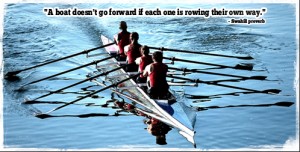
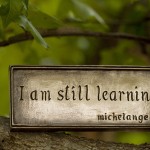 they are not; after a while I guess our minds just play tricks on us. I’d like to think that after a few years in this business I can offer lessons learned and some wisdom. At the same time, if I am not open to the different perspectives and skill sets that another generation and those in different career stages offer, I’ll miss the boat. I am regularly impressed by class project team mates who see things with new eyes, introduce fresh thinking or methods and suggest better approaches than I would think of on my own.
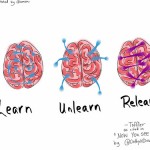 aside, at least for a time, what we thought to be true before. Any new learning is often accompanied by some unlearning, or at least understanding that an answer can be “both / and” instead of “either / or.” I’ve been aware a few times upon returning to BGSU that what I thought to be true, or the way I was accustomed to thinking about things, got in the way of understanding new concepts or learning new methods.
 whether or not that involves formal education. What form our learning journey takes is likely not as important as our mindset on the journey.


 Loading ...